Early California Paintings
Early California paintings is the phrase collectors use for the landscapes, coasts, and related subjects painted in this state from roughly the 1890s through the 1940s. Much of the finest work of that period belongs to California Impressionism, also called California plein air painting: pictures made in close response to the light of the hills, the Pacific, and the high country.
Steven Stern Fine Arts is a third-generation Santa Monica gallery specializing in Early California, Western, and American paintings. Online since 1995, we buy and sell works from this period and offer a confidential evaluation. This guide is a dealing account of the field, not a substitute for looking at the painting itself.
What Early California Art Is
“Early California art” and “Early California paintings” are dealers’ and collectors’ terms, not the name of a single school with a manifesto. They describe work made in California in the late nineteenth and early twentieth centuries, especially in the decades when plein air landscape painting flourished here. The period is usually dated from the 1890s to the 1940s, a useful frame rather than a hard border. Painters were already working out of doors here before 1900, and several major figures lived well past 1940.
Typical subjects include oak hills and sycamore canyons, eucalyptus and wildflowers, the Laguna and Carmel coasts, fishing boats, the High Sierra, the desert and the Southwest, and, less often, gardens, streets, missions, and figures. The common thread is California light, and the attempt to paint it directly.
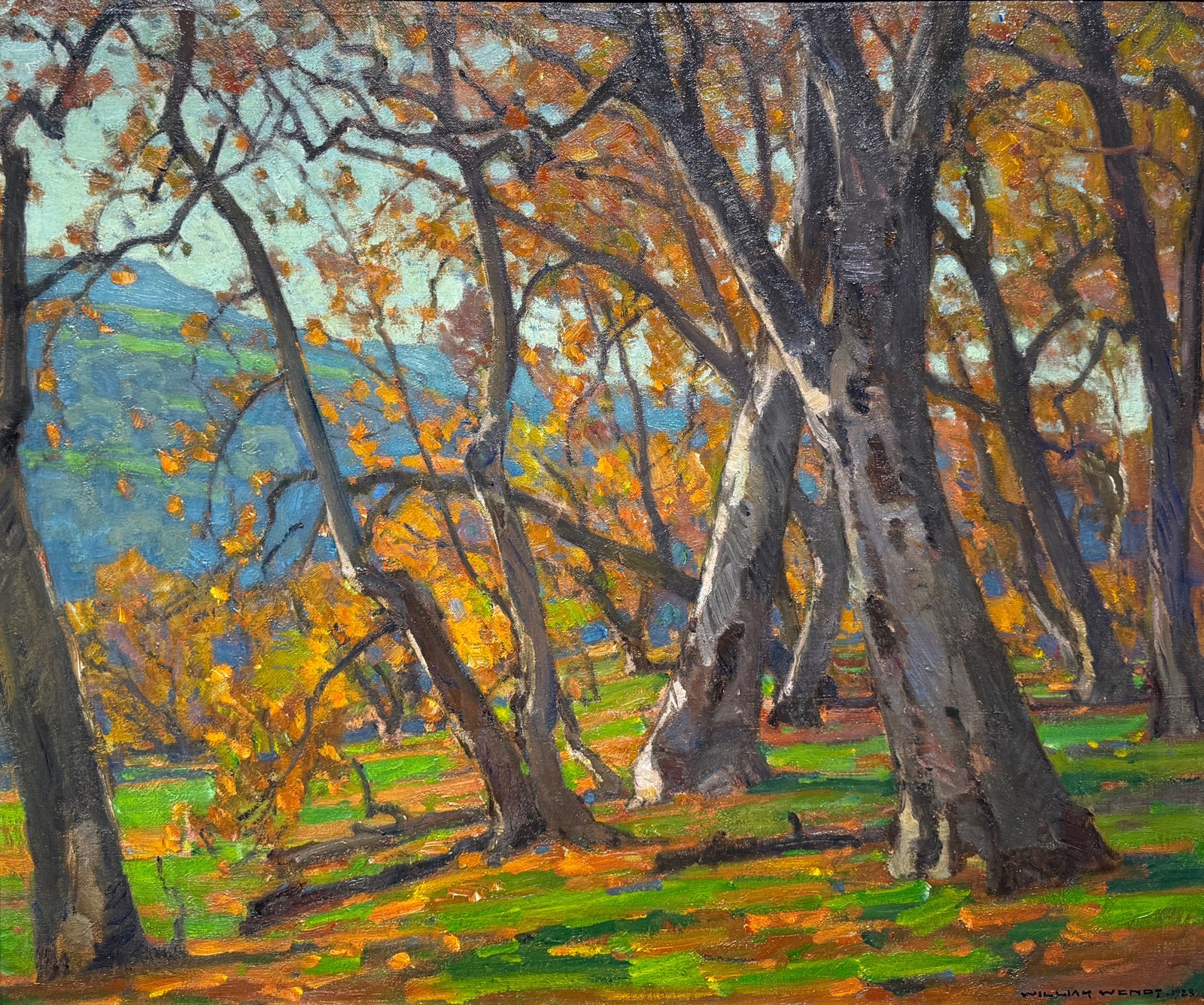
William Wendt, Under the Sycamores
California Impressionism and Plein Air Painting
California Impressionism is the style most closely associated with Early California paintings. American painters who had seen French Impressionism — some of them in France itself — brought its concern with color, atmosphere, and changing light to a very different landscape. The California version is often stronger in color and clearer in structure than its French sources, because the light here is sharper.
Plein air, from the French for “open air,” means painting outdoors, in front of the subject. The phrase overlaps a great deal with California Impressionism, and the two are often used interchangeably. Many artists made studies outside and finished larger canvases in the studio; a studio picture can still be a California Impressionist painting.
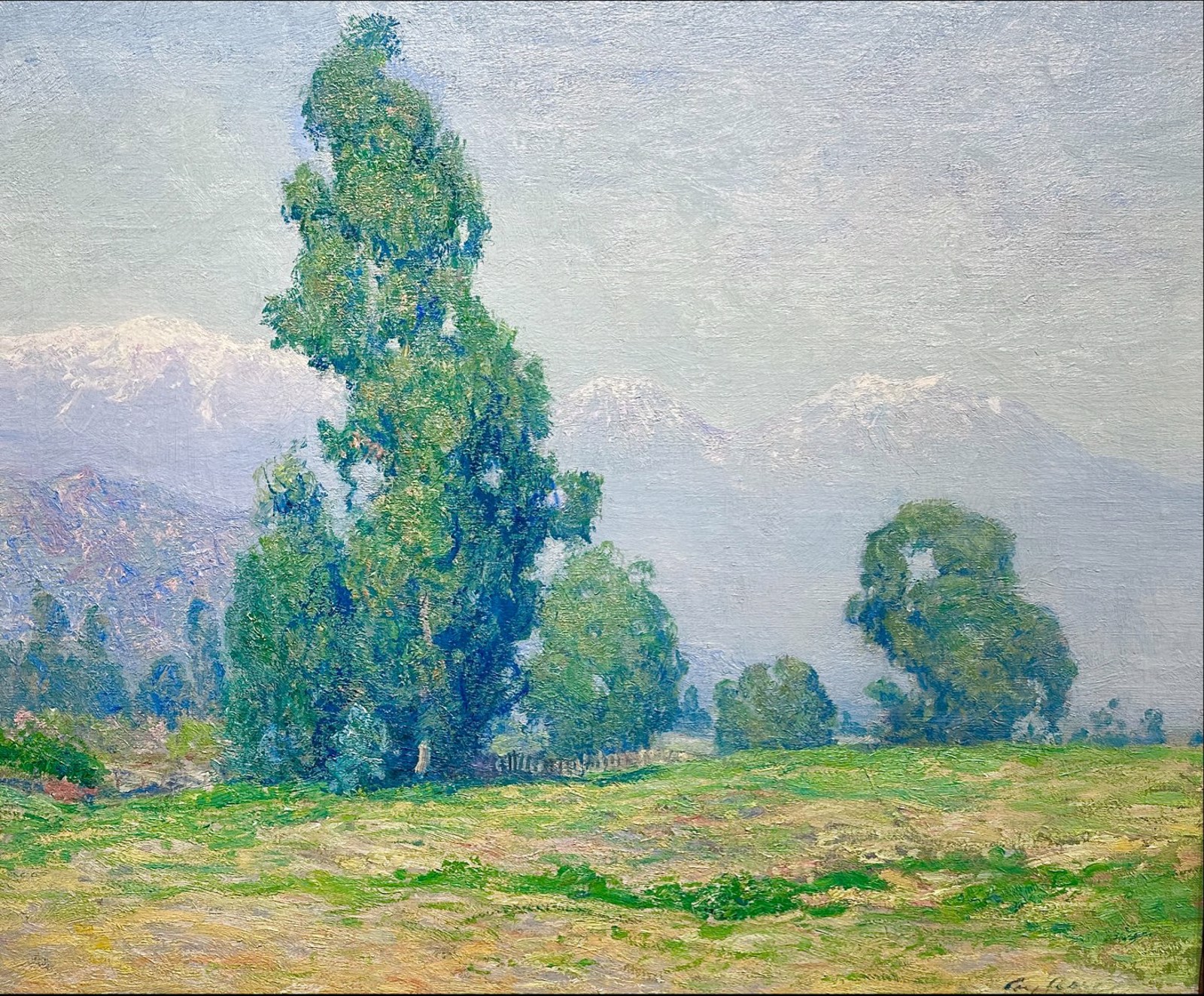
Guy Rose, California Winter
Not every Early California painter was an Impressionist. Granville Redmond worked in both a bright Impressionist manner and a darker Tonalist one. Maynard Dixon, born in Fresno, developed a simplified, modern language for the West. Selden Gile and the Society of Six pushed color further toward modernism in the Bay Area.
The Art Colonies
The work gathered in a few places where painters could live near good subjects, find one another, and exhibit.
Laguna Beach
Laguna Beach was the best-known Southern California colony. In August 1918, Edgar Payne, Anna Hills, and other artists formed the Laguna Beach Art Association, later the Laguna Art Museum; Payne served as its first president. William Wendt made Laguna his home. Joseph Kleitsch settled there in the early 1920s and painted the streets, gardens, and coast with unusual brilliance. Frank Cuprien is closely associated with the Laguna seascape, and Guy Rose painted the southern coast after his return from France.
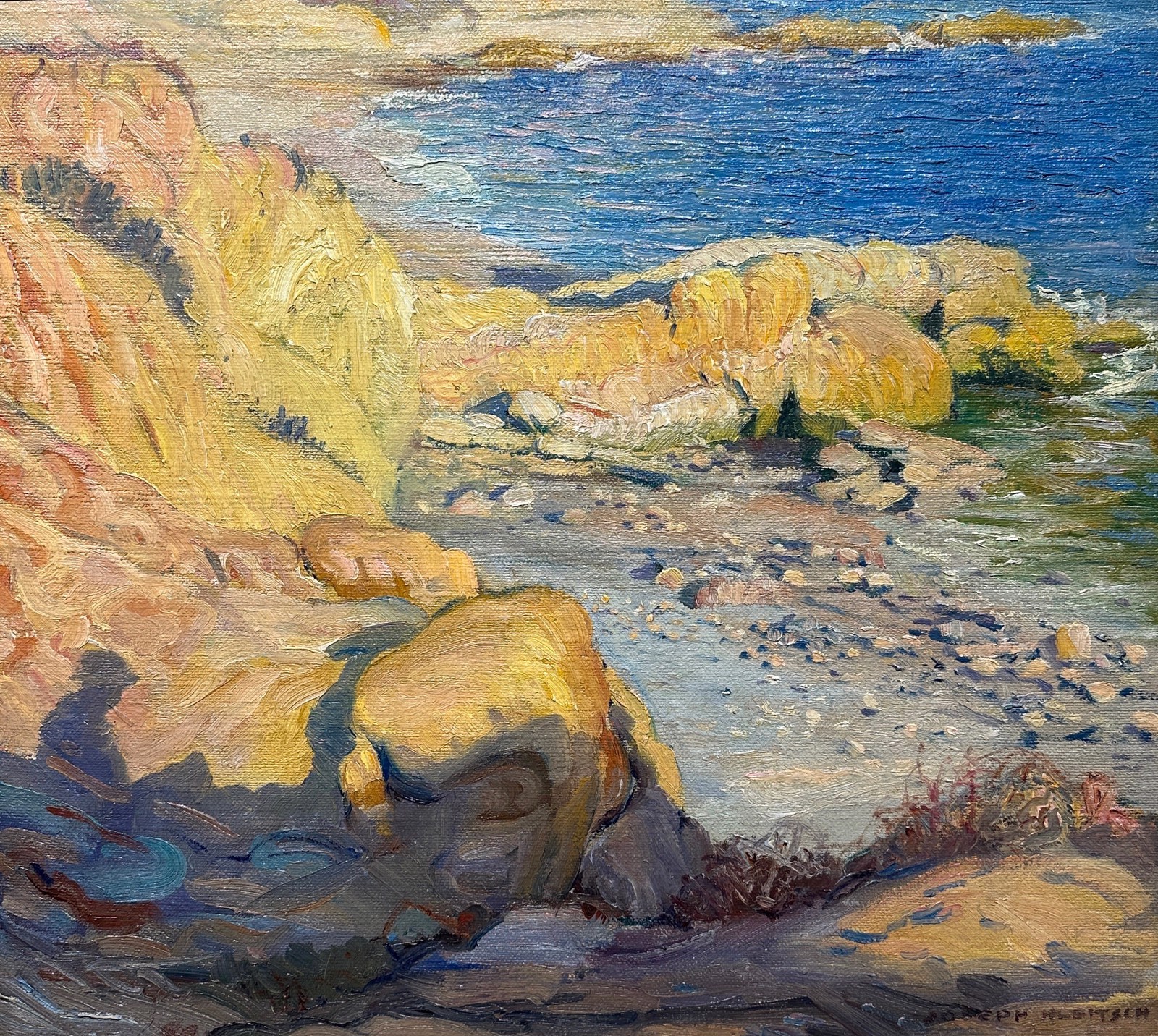
Joseph Kleitsch, Heisler Park Beach
Carmel and Monterey
On the Monterey Peninsula the subject was often the Pacific itself. William Ritschel, who had been a sailor in his youth, settled in Carmel in 1911 and became one of the leading marine painters of California Impressionism. Armin Hansen, born in San Francisco, made Monterey’s fishermen and sardine boats his great subject. Charles Rollo Peters is remembered for Monterey nocturnes.
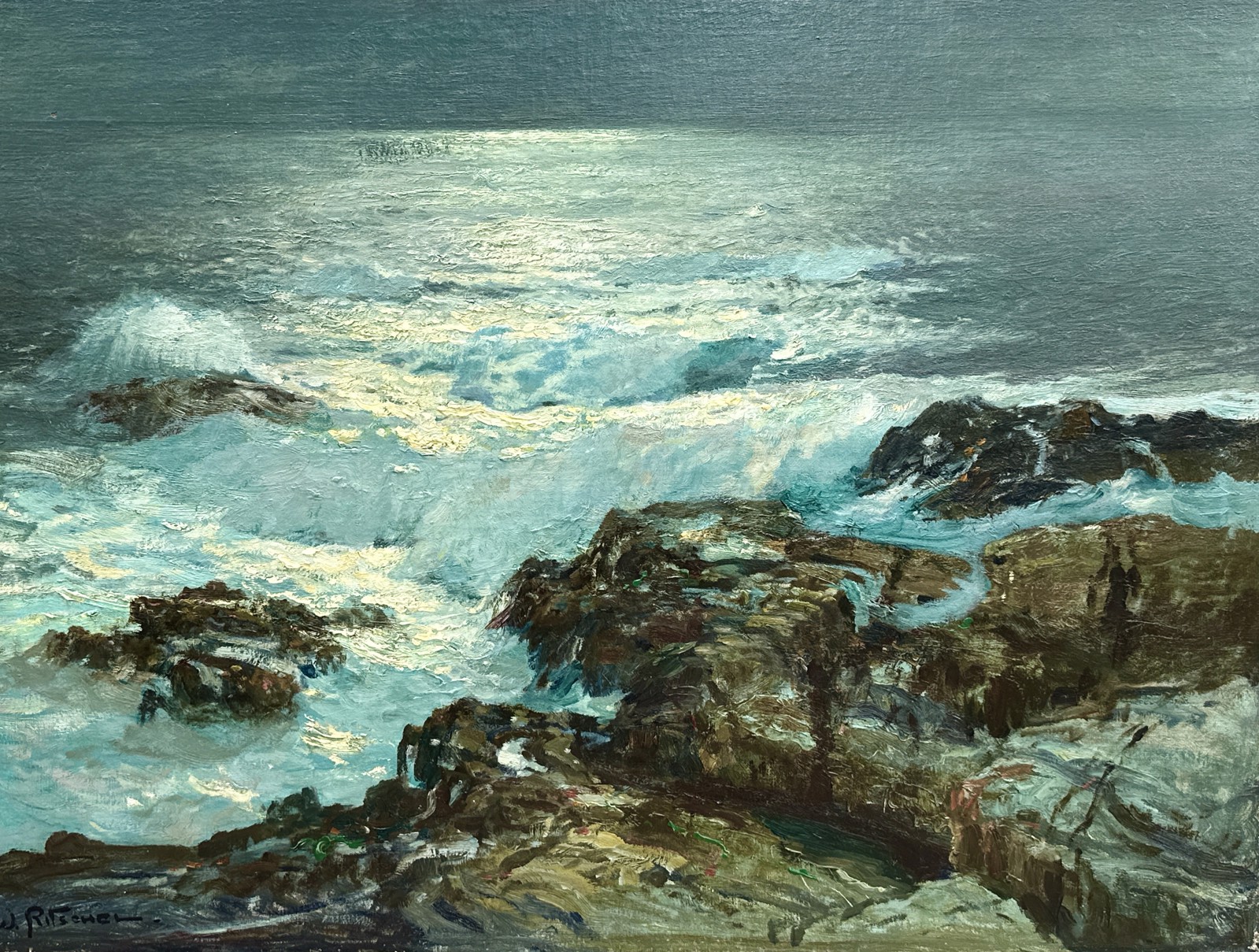
William Ritschel, The Moonpath
Pasadena and the Arroyo
Pasadena and the Arroyo Seco were a center for exhibition, teaching, and a more inland landscape of canyons and gardens. Guy Rose, a native of nearby San Gabriel, settled in Pasadena after his years in France. Franz Bischoff, Alson Clark, Benjamin Brown, and John Frost are closely tied to the city, and Hanson Puthuff painted the nearby hills. The California Art Club, founded in 1909, gave many of these painters a professional home in Los Angeles.
San Diego
San Diego developed its own plein air tradition around the coast, the backcountry, and Point Loma. Maurice Braun moved there in 1910, painted from a studio on Point Loma, and in 1912 founded the San Diego Academy of Art. Alfred Mitchell, who studied with Braun, became one of the city’s principal landscape painters.
The Eucalyptus School
The “Eucalyptus School” is not a formal association and never had a manifesto. The name has long been used, sometimes loosely, for Southern California landscape painters who made eucalyptus groves a recurring subject. Wendt and Puthuff are often discussed in this connection, but eucalyptus also appears in work by Payne, Braun, and John Marshall Gamble.
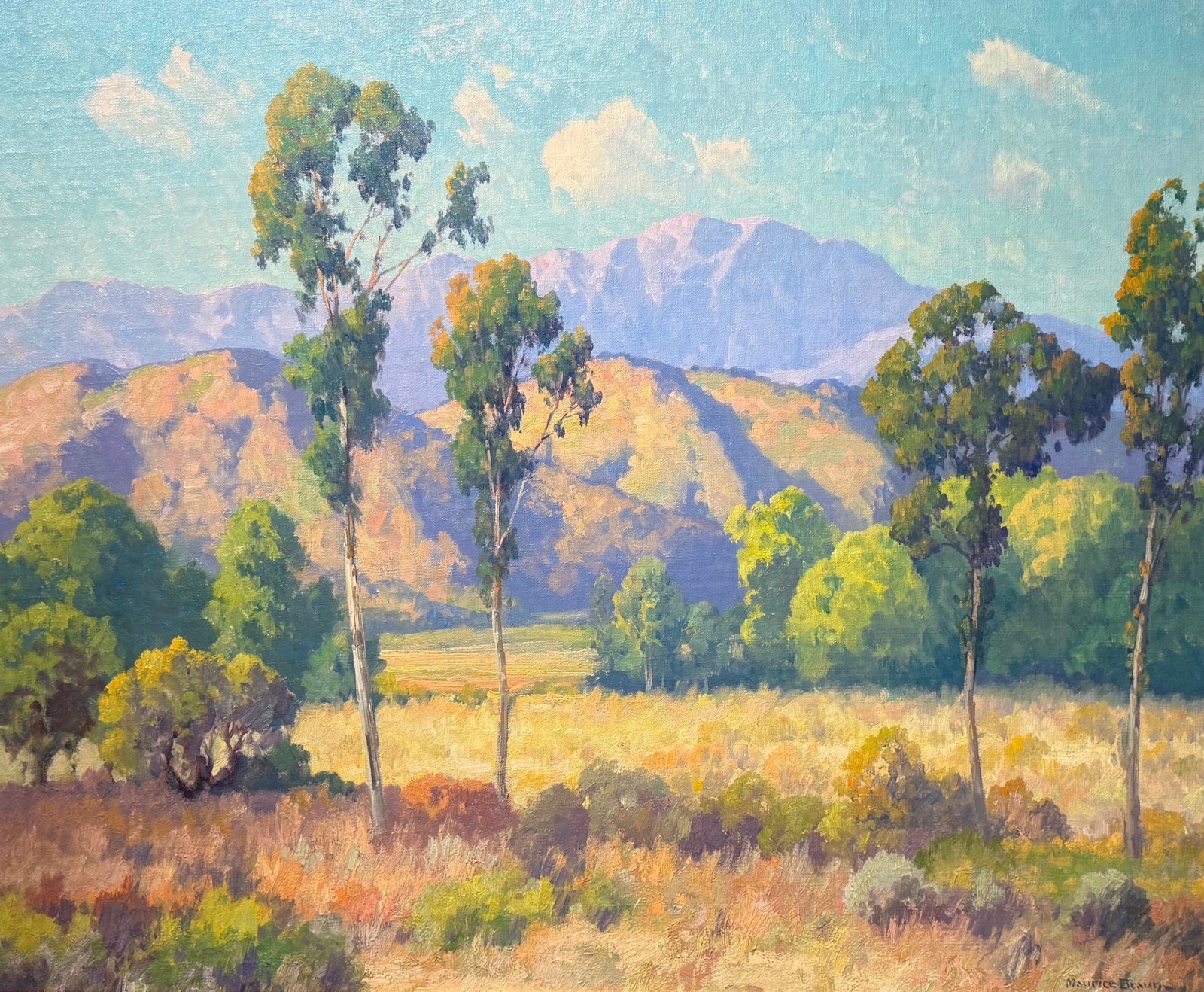
Maurice Braun, Eucalyptus Field
The Bay Area and the Society of Six
Northern California had its own, often bolder, color. Selden Connor Gile, who came from Maine, was the driving force behind the Society of Six, a Bay Area group that painted the Oakland hills, Marin, and the waterfront in a high, modern key and exhibited together in the 1920s.
Key Artists of Early California Painting
The artists below are among those we handle most often, and each has a dedicated page on this site. Dates follow the consensus of standard references. Where a birth year is disputed, that is noted.
Guy Rose (1867–1925). A native of San Gabriel, Rose studied in San Francisco and at the Académie Julian in Paris, worked in Giverny near Claude Monet, and returned to California in 1914. A stroke in 1921 ended his painting career.
William Wendt (1865–1946). Born in Mecklenburg, Germany, and formed as a painter in Chicago, Wendt became the central interpreter of Southern California’s oak hills and coast, almost always without figures. In his lifetime he was called the “Dean of Southern California landscape painters.”
Edgar Payne (1883–1947). Born in Washburn, Missouri, Payne was first president of the Laguna Beach Art Association and is equally known for the High Sierra and for Navajo subjects in Canyon de Chelly. Most references give his birth date as March 1, 1883; the Smithsonian American Art Museum and the Laguna Art Museum give 1882. He married the painter Elsie Palmer in 1912 and died in Hollywood in 1947.
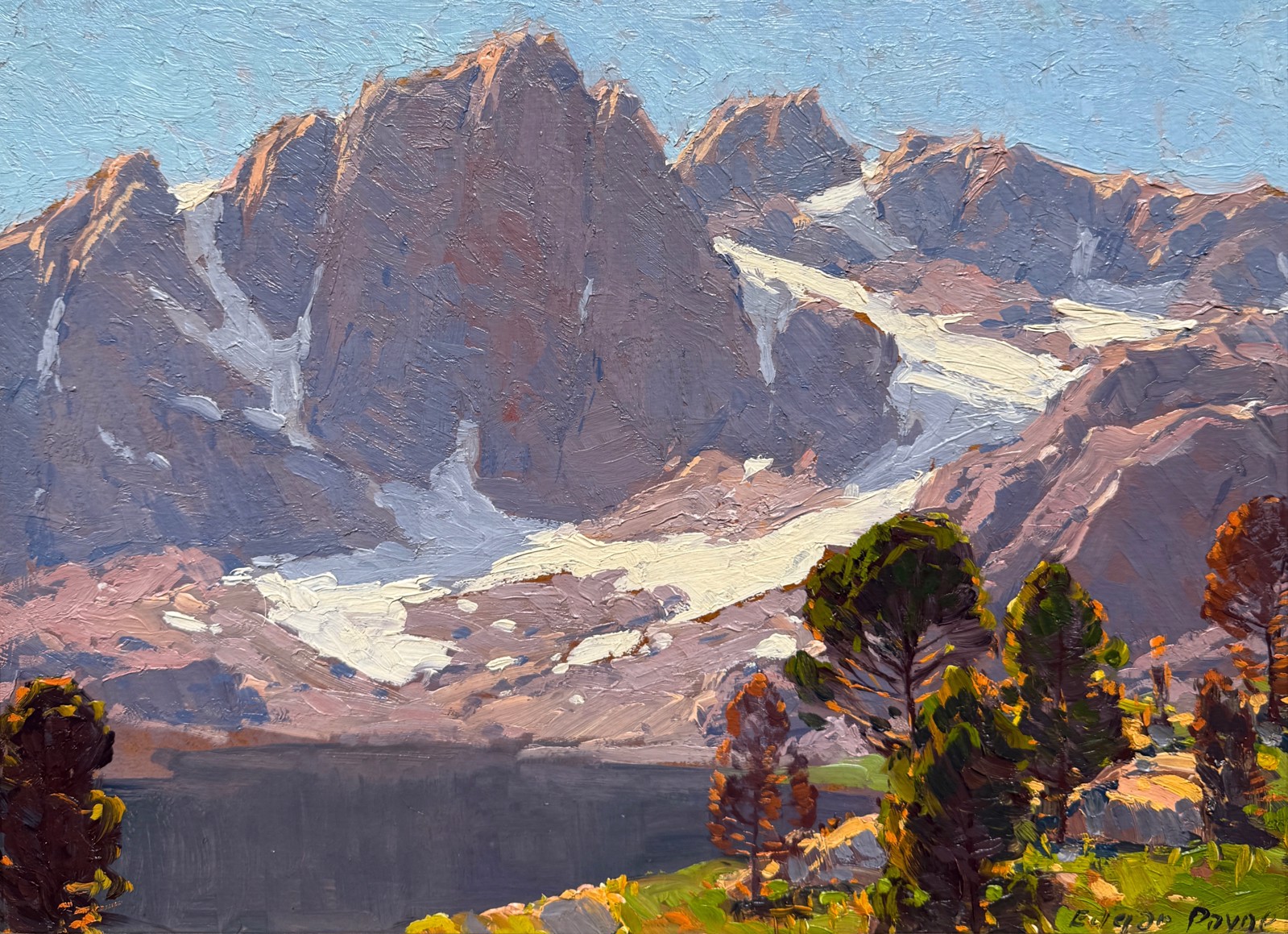
Edgar Payne, Sierra Majesty
Granville Redmond (1871–1935). Born in Philadelphia and raised in California after early scarlet fever left him deaf, Redmond painted hillsides of poppies and lupine as well as quieter Tonalist marshes, coasts, and nocturnes. He studied at the California School for the Deaf in Berkeley and later in Paris.
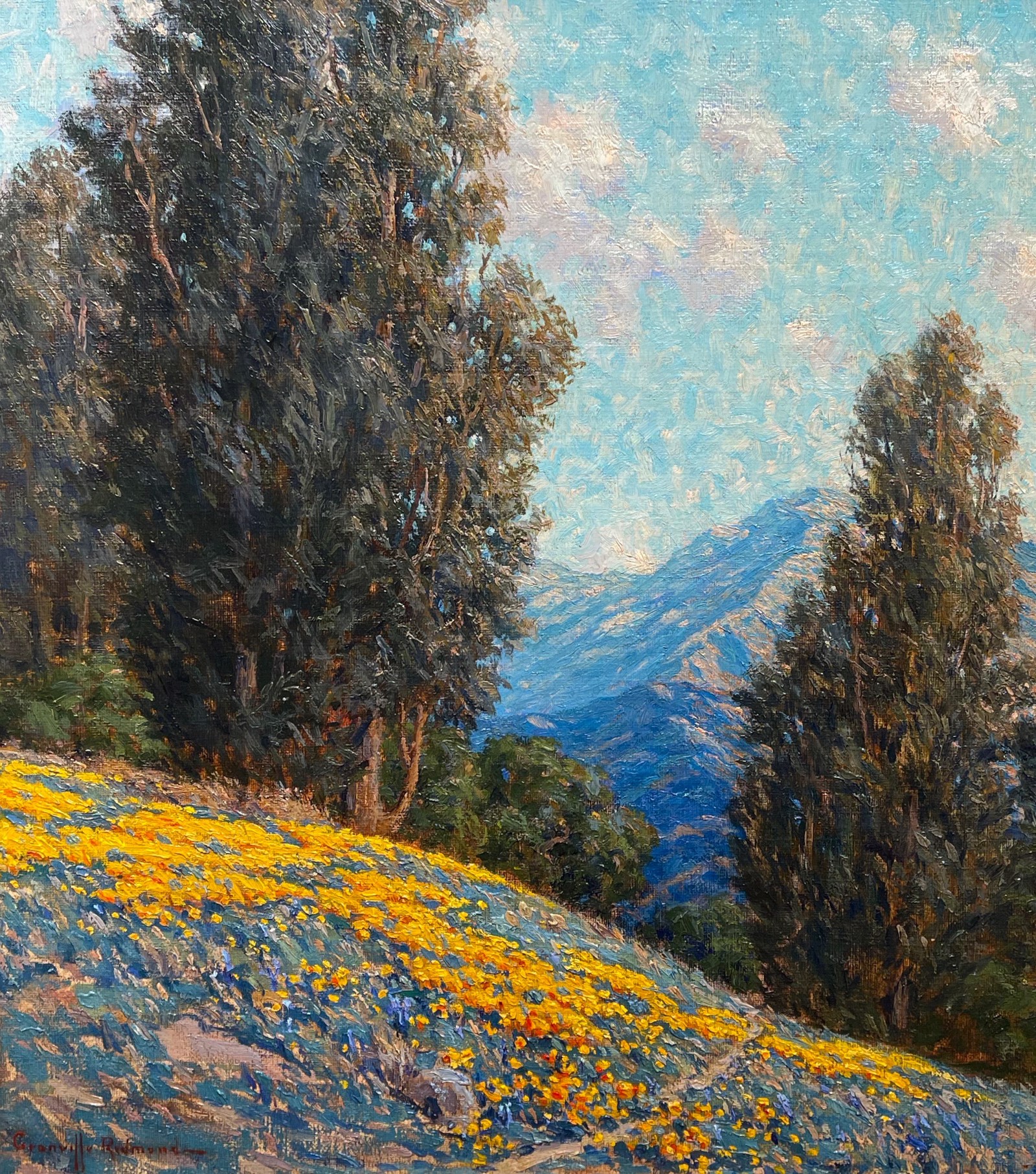
Granville Redmond, Hillside Poppies & Lupine
Joseph Kleitsch (1882–1931). Born in the Banat region of Austria-Hungary, now in Romania, Kleitsch trained as a portrait painter in Europe and settled in Laguna Beach in the early 1920s. He is one of the boldest colorists of the school. A few older records give his birth year as 1885; the scholarly consensus, including Jean Stern, is 1882.
William Ritschel (1864–1949). Born in Nuremberg, Ritschel went to sea as a young man, studied at the Royal Academy in Munich, immigrated to the United States in 1895, and settled in Carmel in 1911. His subject is the Pacific off the Monterey Peninsula.
Selden Gile (1877–1947). Born in Stow, Maine, Gile was the leading figure of the Society of Six in the San Francisco Bay Area. His landscapes are more modern in color than most Southern California Impressionism.
Armin Hansen (1886–1957). Born in San Francisco, the son of the Western painter Herman Wendelborg Hansen, he studied in the Bay Area and in Europe, then made Monterey’s fishermen, fleets, and rough water his subject.
Maynard Dixon (1875–1946). Born in Fresno, Dixon is one of the most original painters of the American West. He is not a Laguna or Carmel Impressionist, but his mesas, clouds, and desert subjects belong in the wider field of Early California and Western painting. He died in Tucson in 1946.
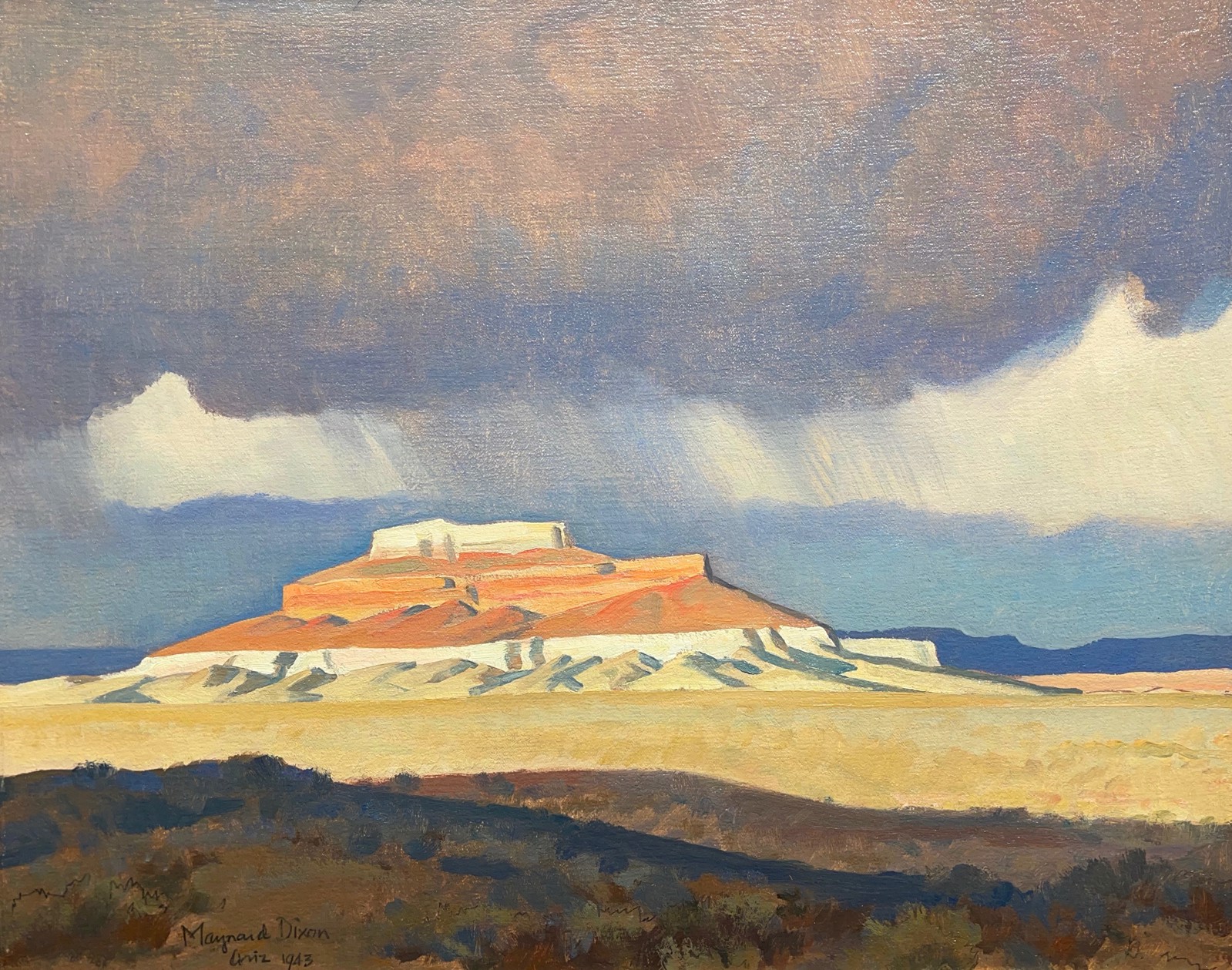
Maynard Dixon, Thunder Over Shiprock
Maurice Braun (1877–1941). Born in Hungary and trained in New York, including a year with William Merritt Chase, Braun moved to San Diego in 1910, painted from Point Loma, and in 1912 founded the San Diego Academy of Art.
Other artists on this site who belong in the same conversation include Franz Bischoff (1864–1929), Anna Hills (1882–1930), Frank Cuprien (1871–1948), John Frost (1890–1937), Hanson Puthuff (1875–1972), Alfred Mitchell (1888–1972), Jessie Arms Botke (1883–1971), Alson Clark (1876–1949), John Marshall Gamble (1863–1957), Colin Campbell Cooper (1856–1937), Charles Rollo Peters (1862–1928), and Benjamin Brown. A fuller list is on our artists page.
How to Identify an Authentic Work
A signature is a starting point, not a conclusion. Early California painters signed in more than one way over a long career, and signatures have been added, strengthened, or imitated. A name on the front does not, by itself, establish authorship.
The back of the picture often tells more than the front. Look for inscriptions, old titles, canvas stamps, stretcher notes, and labels from galleries, exhibitions, framers, or earlier owners. Photograph the front, the back, the signature, and every label before anything is cleaned or reframed.
Compare the painting with documented works: the drawing, the color, and the way the paint sits on the surface. Reproductions, later copies, and optimistic attributions are common, especially for well-known names.
If you are buying or have inherited a picture, we will review clear photographs and, when warranted, the painting itself. That review is a confidential evaluation, not a guess from a signature alone.
Condition and Provenance
Condition and authorship are related but not the same question. A genuine painting may show yellowed varnish, abrasion, a later lining, areas of overpaint, or a frame later than the canvas. Overcleaning is a particular risk in this school, because it can flatten the atmosphere the painter was after. None of these conditions automatically rules a work out, but they should be described honestly and considered before any restoration is undertaken.
Provenance is the recorded history of ownership, exhibition, and publication. A label or exhibition history can support authorship, but many good pictures come from private walls and have only a short paper trail. A thin history is not, by itself, a reason to reject a painting, just as a label is not, by itself, a reason to accept one.
When you write to us, the most useful materials are photographs of the front and back in natural daylight, a close view of the signature, photographs of any labels or inscriptions, the dimensions without the frame, and whatever you know about how and when the painting was acquired.
Buying or Selling with Steven Stern Fine Arts
Steven Stern Fine Arts buys and sells Early California paintings and related American and Western work. We purchase pictures outright and also offer them on consignment or by private placement.
If you are selling, start on our Sell Your Art page, or write or call us directly. Steven Stern reviews inquiries himself. We work with collectors, estates, families, and advisors, and we travel when a picture should be seen in person. All of that is handled as a confidential evaluation.
If you are buying, current inventory is on this site; the Santa Monica gallery is open by appointment.
Steven Stern Fine Arts
Gallery: 2525 Main Street, Santa Monica, CA 90405, by appointment
Mailing address: 11901 Santa Monica Blvd, Suite 601, Los Angeles, CA 90025
Telephone: (310) 570-5679
Email: StevenSternFineArts@gmail.com
Frequently Asked Questions
What are Early California paintings?
They are paintings, most often landscapes and coastal subjects, made in California from roughly the 1890s through the 1940s. Collectors also use “Early California art” for the same work, including California Impressionism, plein air painting, and related Western subjects.
What is California Impressionism, and how does it relate to plein air painting?
California Impressionism applies Impressionist color and light to California subjects. Plein air painting means working outdoors, in front of the motif. The two overlap widely, so “California Impressionist paintings” and “California plein air” often describe the same pictures.
Who are the important Early California artists?
Collectors often start with Guy Rose, William Wendt, Edgar Payne, Granville Redmond, Joseph Kleitsch, William Ritschel, Selden Gile, Armin Hansen, Maynard Dixon, and Maurice Braun. Importance depends on the picture as much as on the name. See our artists pages for each.
How can I tell if an Early California painting is authentic?
Do not rely on the signature alone. Study the painting and its reverse, look for labels and inscriptions, and compare the work with documented examples. For an opinion, send clear photographs for a confidential evaluation.
What should I know about condition and provenance?
Record the present state of the painting before any cleaning or reframing. Varnish, lining, overpaint, and wear are common and should be disclosed. Many genuine works have only a short provenance. The painting itself remains the primary evidence.
How do I buy or sell Early California paintings with Steven Stern Fine Arts?
To sell or to ask us to look at a painting, use the Sell Your Art page, email StevenSternFineArts@gmail.com, or call (310) 570-5679. We can purchase a work outright or offer it on consignment. To buy, browse the site or arrange an appointment at the Santa Monica gallery.